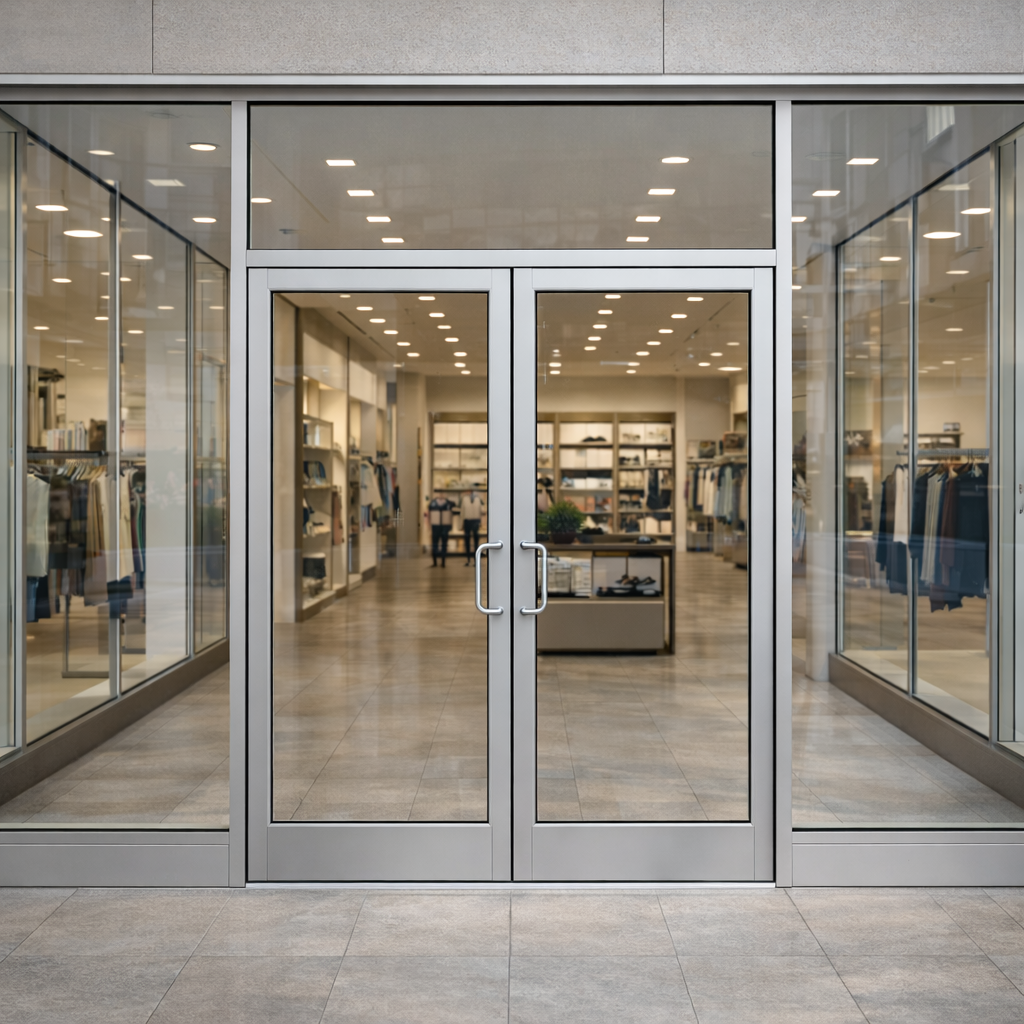
Classic and durable, aluminum storefront systems are the standard for retail and commercial applications. Available in a variety of finishes including clear, bronze, and dark bronze anodized.
Create a sleek, modern entrance with frameless or semi-frameless tempered glass doors. Ideal for upscale retail, showrooms, and contemporary office spaces.
High-traffic entry solutions for retail stores, medical offices, and hospitality venues. Energy-efficient options and configurations designed to support accessibility requirements are available.
Floor-to-ceiling glazing systems that combine aesthetics with structural performance.
Flexible, open-air configurations for restaurants, bars, and event spaces.
Today's commercial glass door systems are engineered for both energy efficiency and security. We carry options with low-E glass coatings, multi-point locking systems, and laminated safety glass to protect your business and reduce energy costs.
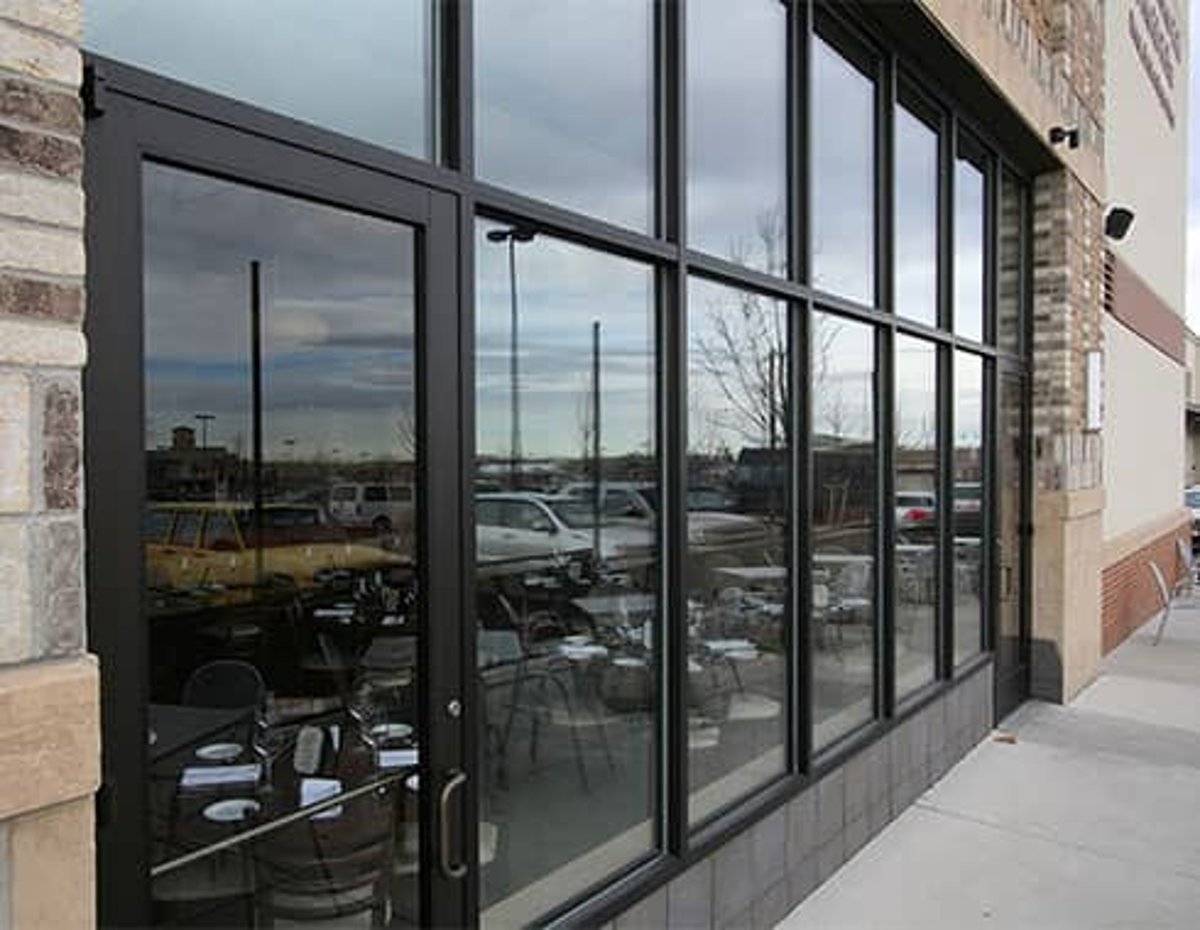
Aluminum-framed storefront doors and tempered glass entrances take a lot of daily traffic, and their hardware — pivots, closers, and locks — tends to be the first thing to show wear. We install and repair storefront entry systems, including aluminum storefront doors, glass doors, and the frames and hardware around them.
Most commercial storefronts in DC are aluminum-framed systems: narrow, medium, or wide stile doors glazed with tempered or insulated glass, set in aluminum framing with sidelights and transoms. We install new aluminum doors and frames, replace individual doors within existing framing, and repair the parts that fail in service, including bent rails, loose glass stops, damaged thresholds, and frames knocked out of square by impact. For openings exposed to constant moisture or corrosion, fiberglass and FRP doors are an alternative, and for service and back-of-house openings see hollow metal doors and frames.
Many aluminum storefront doors in Washington, DC use Adams Rite deadlocks, latches and narrow-stile exit hardware, which we repair, rekey and replace. We also service Jackson exit devices and closers on storefront and glass entrances.
Dragging usually means a worn pivot or hinge, or a door that has shifted out of alignment with the frame. This is one of the most common storefront calls we get.
Storefront doors are often hung on floor-mounted pivots rather than standard hinges. Worn pivots cause dragging, uneven swing, and difficulty closing — we repair or replace pivot hardware as needed. See our commercial door pivot repair page for top, bottom, offset, and center-hung pivots.
Many storefront doors use closers concealed in the floor or the header rather than surface-mounted units. These fail the same ways surface closers do — leaking, slamming, or slow closing — but require different access to service. See our door closer repair page for closer-specific detail.
Storefront pull handles and locks see constant use and are common wear points. We replace broken handles and worn or failing commercial locks. For storefront doors fitted with a push bar or exit device, see our panic bar repair page, and for lock problems our commercial lock repair page.
Worn thresholds affect the door's seal and can create a trip hazard; frame damage from impact affects how well the door closes and locks. Both are addressed as part of storefront repair.
Because storefront entrances are highly visible and heavily used, hardware condition directly affects a property's security. We can also integrate storefront doors with electrified locks and access control — see our access control systems page.
Pivot wear, closer issues, and hardware problems are typically repairable. Full door or frame replacement is generally the right call when the aluminum framing is significantly damaged or the glass itself is cracked or broken.
We install and repair storefront and glass doors for retail and office entrances, and for the glass entrances found at many government and educational buildings in the Washington DC area.
DC Commercial Door Solutions repairs and installs storefront and glass doors for retail and office properties throughout Washington, DC, including Logan Circle and Adams Morgan, where retail corridors depend on storefront entrances that open and close reliably throughout the day.
Dragging is usually caused by a worn pivot or hinge, or a door that has shifted out of alignment with the frame. Pivot wear is especially common on floor-mounted storefront doors.
Yes, concealed closers can leak, slam, or close slowly just like surface-mounted units, and can typically be adjusted or replaced, though they require different access to service.
Yes, pull handles and locks are standard replaceable hardware on storefront doors.
We handle storefront door and frame repair and replacement; significant glass damage is typically addressed as part of a door replacement.
Yes, storefront doors can be fitted with electrified locks and access control hardware. See our access control systems page for more detail.
Yes. Worn top and bottom pivots are the most common reason an aluminum storefront door sags or drags. We adjust and replace offset and center-hung pivots and service the closer at the same time.
Often, yes. Options include closer adjustment, pivot repair, a lower threshold, accessible pulls, or adding an automatic operator with a push plate.
Yes. We install new aluminum storefront and glass doors and replace existing ones, and we repair storefront doors that drag, sag, or will not close or lock.
Yes. Most glass door problems come from the pivots, the closer, or the lock rather than the glass. We find the cause and repair or replace the worn part.
Call (202) 517-2407 or book a consultation appointment online. DC Commercial Door Solutions serves Washington DC, Maryland, and Northern Virginia, 7 AM–10 PM daily.