Commercial Door Closer Repair

Professional Door Closer Repair for DC Businesses

DC Commercial Door Solutions repairs, adjusts, and replaces commercial door closers throughout Washington, DC. This service is for businesses and property owners dealing with a door that slams, closes too slowly, leaks fluid, or won't close and latch on its own.

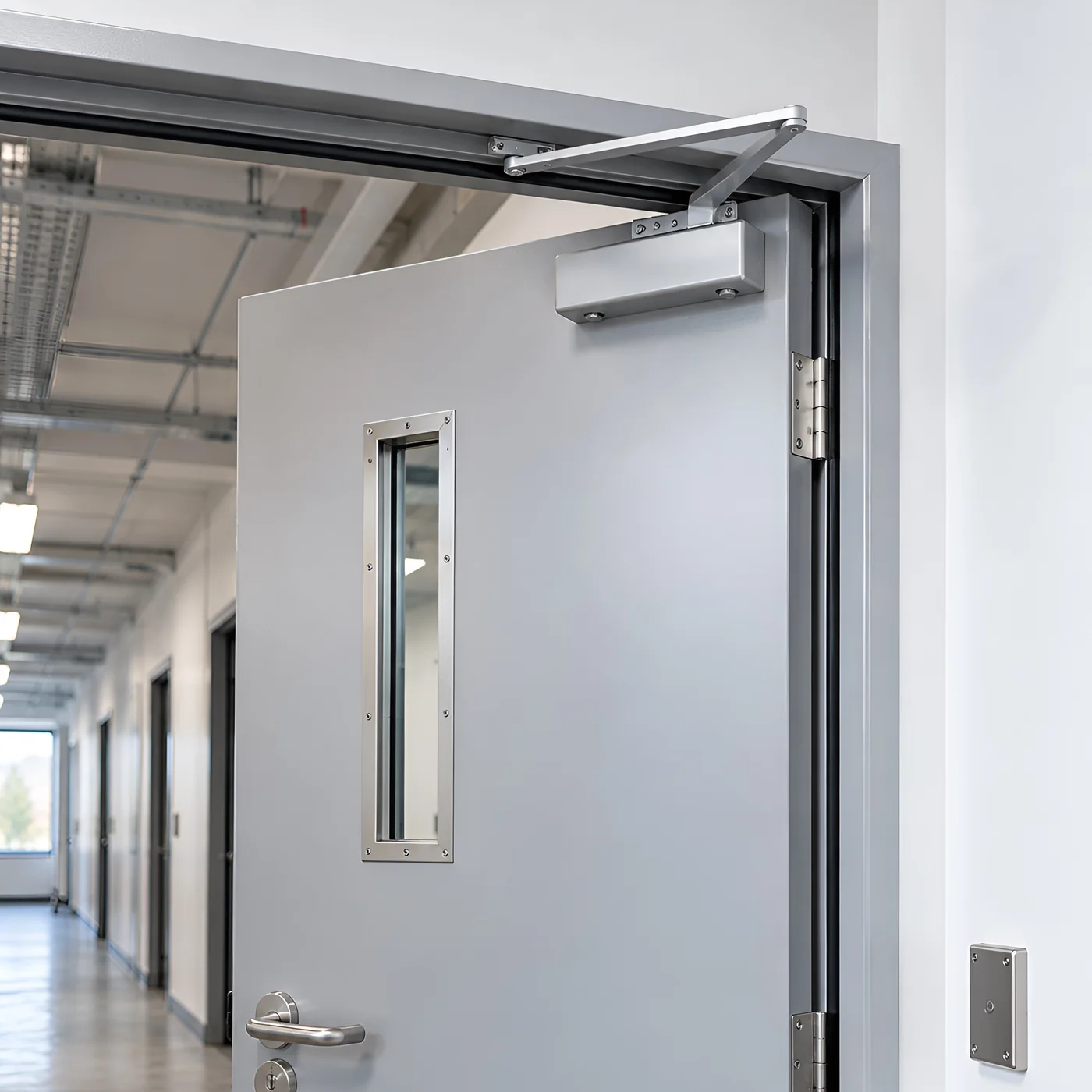
Door closer and arm on a steel office door after commercial door closer repair in Washington DC

Door Closer Service Overview

A door closer is the hydraulic or spring-based device mounted on a commercial door that controls its swing speed and makes sure it closes and latches automatically. When a closer wears out or is set incorrectly, the door can slam, drift open, close too slowly for the latch to catch, or leak hydraulic fluid. We diagnose closer problems on entrance doors, interior fire/smoke doors, and storefront systems, then adjust, repair, or replace the unit as needed.

We adjust, repair and replace surface-mounted, concealed and overhead closers from the manufacturers most often found in Washington, DC commercial buildings, including LCN, Norton, dormakaba and International Door Closers. On center-hung storefront and entrance doors, we also service Rixson floor closers and offset pivots. When a closer can no longer be adjusted or rebuilt, we install a correctly sized replacement and set the closing and latching speeds so the door shuts and latches reliably.

Types of Commercial Door Closers

  • Surface-mounted closers The most common type, mounted on the face of the door or frame and visible from the hallway or entrance. They are the simplest to adjust and replace.
  • Concealed overhead closers Hidden in the header above the door for a cleaner appearance. These are standard on many aluminum storefront doors and work together with the door's pivots.
  • Floor closers Set into the floor beneath the door, typically under heavy glass, aluminum, or center-hung doors. The closer carries the door's weight as well as controlling its swing.
  • Heavy-duty closers Rated for larger or higher-traffic doors, including exterior doors exposed to wind.
  • Fire/smoke-door closers Closers on fire-rated doors need to reliably return the door to a fully latched, closed position; see our fire-rated doors page for related information.

Common Door Closer Problems

Why is my commercial door slamming?

A door that slams shut usually has a closer with a worn or failed internal valve that no longer controls the closing speed, or the closing-speed adjustment screw has been set too aggressively. In many cases this can be corrected with adjustment; a closer that won't hold any adjustment has likely failed internally and needs replacement.

Can a leaking commercial door closer be repaired?

A closer that is visibly leaking hydraulic fluid has a failed internal seal and cannot be repaired — it needs to be replaced. A leaking closer will typically lose its closing control over time, so it's worth addressing before the door stops closing altogether.

Why won't my commercial door latch?

If the door closes but doesn't latch, the closer's "latch speed" adjustment may be set too fast for the latch to catch, the door may be misaligned with the frame, or the latch or strike hardware itself may be worn. We check adjustment, alignment, and hardware condition to find the actual cause.

Why is my commercial door closing too slowly or not closing all the way?

A door that creeps shut or stalls before it latches may have its sweep speed set too slow, thickened or lost hydraulic fluid, a weakened spring, or something physically holding it back, such as a dragging threshold, worn pivot, or air pressure in the building. We check the door itself before blaming the closer.

Concealed and Floor Closers on Storefront Doors

On an aluminum storefront door, the closer is usually hidden in the header or the floor and doubles as part of the pivot assembly. When one of these fails, the symptoms often look like a door problem: the door will not return to center, swings freely with no control, leaks oil at the floor or header, or sags. Servicing them means removing the door, so we inspect the closer and the top and bottom pivots together and replace what is worn in one visit. Some concealed and floor closers can be adjusted; a unit that has lost its fluid needs to be replaced with a model that matches the existing door preparation.

Door Closers and Accessibility

Closer settings directly affect how easy a door is to use. Too much spring power makes the door heavy to open, and too fast a closing speed does not leave time to pass through. Where a client is working toward ADA-related door upgrades, we adjust closing speed and opening force as far as the opening allows, and can recommend a different closer or a power operator when adjustment alone is not enough. Exterior and fire-rated doors still have to close and latch reliably, and we do not certify compliance. See commercial door accessibility.

Adjustment, Repair & Replacement

Many closer problems are corrected through adjustment alone — closing speed, latch speed, and backcheck can all be tuned on most closers. When adjustment doesn't resolve the issue, or the unit is visibly leaking or physically damaged, replacement with a closer rated correctly for the door's size and use is the appropriate fix. We can typically adjust a commercial door closer during a service visit; full replacement timing depends on the hardware and door type.

Properties We Serve

We repair, adjust, and replace door closers for commercial buildings and for government and educational facilities throughout the Washington DC area.

  • Government Buildings & Facilities Surface, concealed, and floor closers on heavy public entrance and corridor doors.
  • Schools & Educational Facilities Closers on classroom, hallway, and exterior doors adjusted so they close reliably without slamming.
  • Universities & Colleges Closer service for high-traffic academic and residence hall doors.
  • Commercial & Multi-Family Properties Office buildings, retail properties, healthcare facilities, hotels, warehouses, apartment buildings, condominiums, and property management portfolios.

Serving Washington DC

DC Commercial Door Solutions repairs and replaces commercial door closers for businesses throughout Washington, DC, including entrances in Dupont Circle, Georgetown, and Adams Morgan, where storefront and office entrance doors see heavy daily foot traffic.

Frequently Asked Questions

Why is my commercial door slamming?

Slamming is usually caused by a worn or failed closer valve, or a closing-speed adjustment set too aggressively. Adjustment resolves many cases; a closer that won't hold adjustment has likely failed and needs replacement.

Can a leaking commercial door closer be repaired?

No — a closer leaking hydraulic fluid has a failed internal seal and needs to be replaced rather than repaired.

Why won't my commercial door latch?

This is often a latch-speed adjustment issue, door-to-frame misalignment, or worn latch and strike hardware. We check all three to identify the actual cause before recommending a fix.

When should a door closer be replaced instead of adjusted?

Replacement is appropriate when the closer is leaking fluid, won't hold adjustment, or is physically damaged. If the unit still holds adjustment and isn't leaking, repair or tuning is usually sufficient.

Can you adjust a commercial door closer on site?

Yes. Closing speed, latch speed, and backcheck adjustments are typically made directly on the closer during a service visit without needing to remove the unit.

Do you repair concealed closers and floor closers?

Yes. We adjust, repair, and replace concealed overhead closers and floor closers on storefront and heavy commercial doors, and inspect the door pivots at the same time since they work as one assembly.

Can a door closer be adjusted to make a door easier to open?

Often, yes. Spring power and closing speed can be reduced on most closers. The door still has to close and latch properly, particularly on exterior and fire-rated openings, so we set it as light as the opening allows.

Do you install new door closers?

Yes. We handle door closer installation and replacement on new and existing commercial doors, including surface-mounted, concealed, and floor closers, sized to the door’s weight and traffic and adjusted on site.

Contact DC Commercial Door Solutions

If a commercial door closer on your property is slamming, leaking, or not latching, call DC Commercial Door Solutions at (202) 517-2407 or book a consultation appointment below.

Go To Top